Vero Beach, FL · Garage Door Service
South Beach homes cluster around 1985, a notch ahead of the wider Vero Beach service area. We cover the 6-mile run from Vero Beach with parts sized for that era.
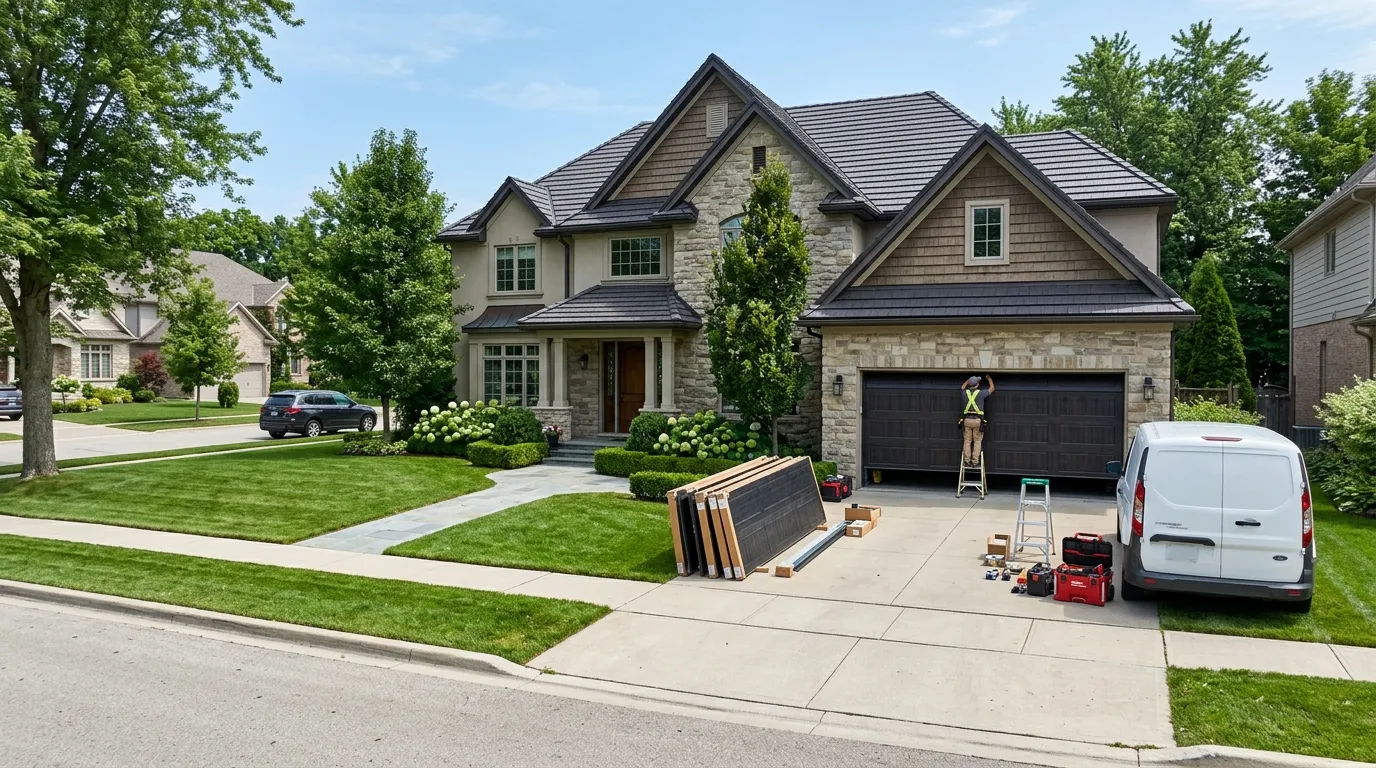
Calls from Indian River Shores tend to follow the age of the neighborhood. Most of the homes here went up around 1986, which puts the garage door hardware square in the middle of its expected working life for springs and rollers, but right at the point where openers start failing for good. We hear a lot about openers that grind, chain drives that have gone loud, and torsion springs that let go without warning on a door that otherwise looks fine. Across the wider service area of 33,258 households, Indian River Shores is one of the smaller pockets, with around 2,404 households, and a household income of $149,722 that's well above the area median of $65,809 - which shows up in the calls as more requests for a full opener upgrade instead of a patch repair, and less tolerance for waiting on a part. We're 4 miles out from our shop in Vero Beach, a short run whether the call is a stuck door before work or a spring that snapped on a Saturday.
A door built around 1986 is old enough that the original springs have likely been replaced once already, and the opener - if it's still the first one - is well past the point where parts are easy to find. The mild coastal climate here means you're not fighting frozen tracks or ice-locked openers like colder regions do, but salt air close to the water still works on unprotected hardware, and galvanized springs and exposed bolts show it first. What we mostly find on these calls is wear, not damage: a spring at the end of its cycle count, a roller that's worn oval instead of round, an opener logic board that's simply old. None of that is dramatic, but it's the kind of failure that happens without a leak or a storm to blame.
Indian River Shores sits about 4 miles from Vero Beach, and the housing stock reflects a build period concentrated around 1986 - later than some of the older sections closer to town, and fairly uniform street to street. That consistency is useful: a technician who's worked on a few doors in this pocket usually recognizes the hardware on the next one, same tracks, same spring sizing, same opener mounting. It's a smaller area than most of the ones we cover, with roughly 2,404 households, so the range of door ages and models is narrower than you'd see across the full service territory, which runs from Gifford and Winter Beach nearby out to farther points like Fellsmere and White City.
Given the age of the housing here, the most common jobs are spring replacement, opener swaps, and track or roller service on doors that have never had a real tune-up. We'll also get calls for panel damage from a backed-into door, which isn't tied to the age of the house at all. One honest limit: if an opener is old enough that the control board is discontinued, we won't hunt for a matching part that no longer exists - replacing the unit is usually faster and cheaper than chasing a part nobody stocks. For a house built in the mid-80s, that's often the more sensible call anyway, since a new opener runs quieter and safer than what it's replacing.
About 4 miles from our location in Vero Beach - close enough that we run out here regularly for both scheduled jobs and same-day calls.
Most homes here were built around 1986, which is fairly consistent street to street. That's newer than some older pockets in the service area but still old enough that original springs and openers are due for replacement.
The mild climate means no ice or freeze issues, but salt air near the water does work on exposed springs and bolts over time. It's a slower kind of wear than storm damage, but it adds up on original hardware.
No, we run out of Vero Beach and travel the roughly 4 miles into Indian River Shores for calls - there's no depot in the area itself.
Call now or request a free quote - same-day service on most repairs, upfront written pricing.
Most of the service area we cover was built between 1969 and 2007, with a median around 1987. South Beach sits just ahead of that curve at 1985, which puts most of its garages in a narrower window than a lot of the neighborhoods we drive past to get here. That matters because doors from that stretch of the 1980s were built to a fairly consistent spec - steel panels, torsion springs sized for lighter sectional doors, and openers that are now well past their working life even if nobody's touched them since installation.
When we get a call from South Beach, we're not guessing at what's behind the door. We bring spring sizes and drum sets that match mid-80s residential doors, plus the openers that were most commonly paired with them before belt drives took over. The area's household income runs well above the wider service area's median, which we mention only because it tends to mean owners want the repair done right the first time rather than patched - full spring pairs, not single-spring band-aids, and openers replaced rather than rewired.
We travel the 6 miles out from Vero Beach for every call. There's no separate branch or crew stationed in South Beach - it's the same trucks, same stock, just a short drive.
A torsion spring adjustment or full replacement on a door from this era is not a homeowner job. The spring is under enough tension to break bones if it slips off a winding bar, and the drums and cable drums used on 1980s doors aren't always a match for the universal kits sold at hardware stores. If you're comfortable with a ladder and a screwdriver, you can handle lubricating rollers and hinges, tightening loose bolts on the track brackets, and checking that the photo-eye sensors are aligned and clean.
What you shouldn't touch: the torsion spring itself, the cables, or anything involving disconnecting the opener while the door is under spring load. If your door is from the mid-80s and the spring has never been replaced, it's operating past the point most manufacturers rate for cycle life, and it can let go without warning.
One honest limit here: if the opener is original to a 1985 build, we generally recommend replacement over repair once the motor itself is failing. Parts for openers that old are harder to source and the labor to keep patching an obsolete unit usually costs more over a year than a new opener would.
Call or use the request form on our South Beach area page and tell us what the door is doing - won't open, opener runs but door doesn't move, spring snapped, door off track. We ask for the age of the house if you know it, since South Beach's housing skews to the mid-1980s and that tells us which spring size and drum set to load before we leave Vero Beach.
We don't keep a separate crew or yard in South Beach - every job here is covered by the same trucks based in Vero Beach, about 6 miles away. That's not a downside for scheduling, just a fact worth knowing if you're expecting a local depot number to call.
Have the make of your opener handy if you can find it - a sticker on the motor housing usually has it. It saves a trip back to the truck for the right remote or logic board.
For a service area where the median build year sits at 1987 and South Beach itself clusters closer to 1985, we stock torsion springs and drums matched to standard-lift residential doors from that period, along with the steel roller and hinge sets that were common before nylon rollers became the default upgrade. We carry photo-eye sensor kits since most doors from this era were retrofitted with them after the 1990s safety mandate, and a lot of those original sensors are now the point of failure.
We also stock a range of chain-drive and screw-drive openers, since both were common through the late 80s and into the 90s across this part of the service area. What we don't stock: parts for smart openers with proprietary control boards from the last few years - those we order in, which can add a day or two to a job. If your door needs one of those parts, we'll tell you upfront rather than have you wait on a truck that doesn't have it.
The complaint we hear most from houses built around 1985 is a door that opens partway, hesitates, and then either stalls or slams down. That's almost always a spring that's lost tension unevenly - one side of a double door sagging while the other holds. On a single spring system, common on doors from this build era, it's often total failure rather than partial: the door simply won't lift past a foot without help.
A second pattern: the opener runs, you hear the motor, but the door doesn't move or moves an inch and reverses. On doors this old, that's frequently a broken drum cable rather than the opener itself, and it gets misdiagnosed as motor failure more often than it should.
Mild coastal Florida temperature swings don't stress hardware the way a harsh freeze-thaw climate does, so when we see spring failure at this age, it's more often simple fatigue - the spring reaching the end of its rated cycle count - than weather damage.
We don't publish flat prices here because the fix depends on what's actually wrong - a single spring replacement costs less than a full opener swap, and a door with bent track from an impact costs more than either. What we can say: South Beach's household income runs well above the wider Vero Beach service area's median, and in practice that means more owners choose full replacement of both springs and the opener at once rather than patching one part and waiting for the next failure.
We'll give you a number before we start, not after. If a repair doesn't make sense against the cost of a new door - which happens more with panels than with springs - we'll say so plainly rather than bill you for a fix that won't hold.
About 6 miles from Vero Beach. We don't keep a separate crew or yard in South Beach - the same trucks that cover Vero Beach make the drive out for every call here.
Slightly. The wider service area's housing spans 1969 to 2007 with a median around 1987, while South Beach clusters a bit earlier, around 1985. It's a narrow difference but it means spring and opener sizing is fairly consistent house to house here.
Yes, chain-drive and screw-drive openers common through the 1980s and 90s are in stock on the truck. Newer smart openers with proprietary boards sometimes need to be ordered in, which can add a day or two.
Usually not once the motor itself is failing. Parts get harder to source and the labor to keep patching an old unit tends to cost more over time than replacing it outright. We'll tell you which side of that line your unit falls on.