Vero Beach, FL · Garage Door Service
A look at what actually happens on a Vero Beach service call, tied to this area's 1980s-90s housing stock and mild, humid coastal climate.
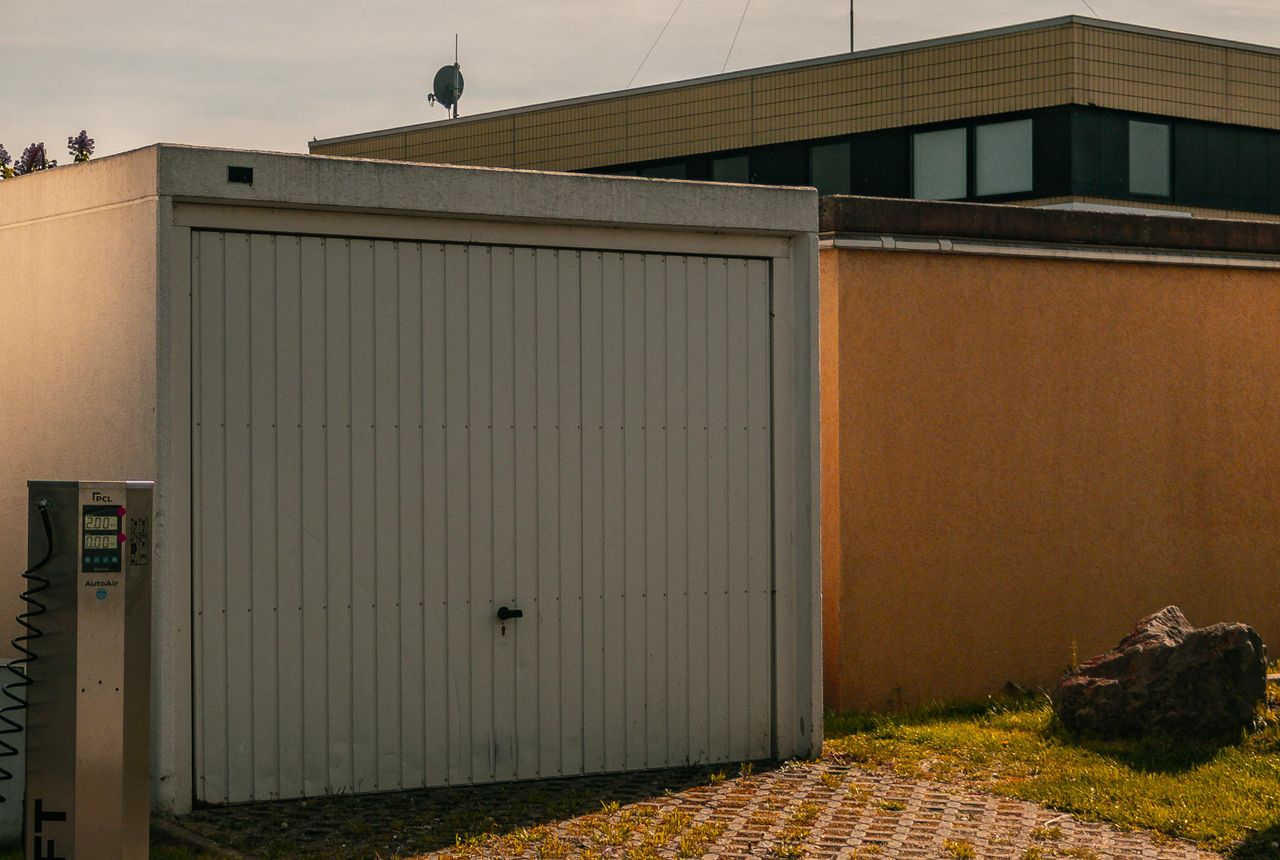
Most calls start with the wrong guess. A homeowner hears grinding and assumes the opener is dying, so that's what they ask for on the phone. Half the time the opener is fine - it's the rollers or the track bolts that have given up, and that's a different repair with a different price.
This matters more here than it would somewhere with newer housing. Across the fourteen named areas we cover - Gifford, Indian River Shores, Winter Beach, the West Vero corridor, South Beach, Wabasso Beach, Lakewood Park, Wabasso, Fort Pierce North, Roseland, Fellsmere, Micco, Fort Pierce South, and White City - the bulk of the housing stock went up in the 1980s and 90s. That's a specific generation of door hardware: steel rollers, non-insulated panels, torsion springs sized for lighter doors than what people sometimes bolt on later when they upgrade to insulated steel.
So the first thing a tech does on any call is figure out which era of door and hardware they're actually standing in front of, not just what the symptom sounds like on the phone. Skipping that step is how people end up paying for an opener board when the real issue was three worn rollers costing a fraction as much.
Torsion springs are rated for a number of open-close cycles, not for years, but in practice that works out to somewhere around 15 years of average household use before a spring is due to fail. With median construction here landing around 1987, a lot of these doors are on their second or even third spring by now, and the ones that haven't been replaced yet are due.
Rollers and track hardware fail on a different timeline, driven less by cycle count and more by corrosion. Steel rollers from the 1980s-90s building wave weren't built with the sealed bearings you'd see in newer nylon rollers, so they're more exposed to rust once moisture gets into the housing. Once a roller starts to rust, it doesn't roll evenly anymore - it drags, which puts extra strain on the opener and the track brackets, which is how one small failure turns into three.
We don't see much frozen-hardware failure here - that's a different climate's problem. What we see instead is slow corrosion: springs that lose tension unevenly, tracks that pit, bolts that seize. It's a quieter failure mode than a dead-of-winter snap, but it adds up the same way, just slower and with more rust involved.
This area sits in a mild temperate band - no hard freezes, no snow load on the door, nothing that cracks a panel from cold. That's the good news. The trade-off is humidity that stays fairly constant most of the year, and for areas closer to the coast - Wabasso Beach, South Beach, Indian River Shores - salt air layered on top of it.
Moisture doesn't announce itself the way a snapped spring does. It works on unsealed steel hardware slowly: a little surface rust on a roller pin, a little pitting on a track bolt, a spring coil that loses tension unevenly instead of all at once. On a house built in the 1980s or 90s stretch, with original hardware, that's decades of exposure with nothing to interrupt it.
What this means on a service call is that a tech checks corrosion on rollers, hinges, and track bolts as a matter of course, not as an afterthought, because in this climate that's often where the actual problem is hiding even when the customer called about something else - a noisy door, a door that sticks partway, an opener that strains. The humidity is doing the damage; the symptom is just where it shows up first.
We're not going to put a number here that isn't backed by a real look at your door - that's the honest limit of what we can say without seeing the hardware. What we can say is what's actually on the invoice when a tech finishes a call: the diagnostic time to find the real failure (not just the symptom you called about), the part or parts that get replaced, and the labor to put it back into proper adjustment and balance - a door that's been re-sprung or re-rollered but never rebalanced will wear the new parts out just as fast as the old ones.
Some parts sit on the truck. Others, especially for older non-insulated panel styles from the 1980s-90s stock common here, sometimes take longer to source, and we'll tell you straight if that's the case rather than promise a same-day fix we can't back up.
The short version: a service call covers finding the actual cause, not just quieting the symptom, and putting the door back into balance so the fix holds. What it costs depends on what's actually worn, which is exactly why we look before we quote.
If the door is slow, uneven, or noisy but the opener motor sounds normal, it's usually mechanical - springs, rollers, or track. If the opener strains, reverses, or won't respond at all, that's more likely the opener or its sensors. A tech checks both on any call rather than assuming from the symptom alone.
This area sits in a mild, humid climate without hard freezes, which is easier on some parts but harder on unsealed steel hardware - rollers, hinges, track bolts. Constant moisture, especially closer to the coast, corrodes steel gradually even without a single dramatic weather event.
It can. Houses from that era often still have original steel rollers and non-insulated panels, hardware that behaves differently than newer sealed-bearing, insulated equivalents. Knowing the door's age helps a tech guess less and diagnose faster, and it can affect how quickly a specific part is on hand.
Not an exact one, honestly. Springs, rollers, and track wear all look different once we're standing in front of the door, and quoting blind isn't something we're comfortable doing. We'll give you a real number after a look, not a guess before one.
Call now or request a free quote - same-day service on most repairs, upfront written pricing.